Just someone writing about the highs and lows of the Brighton and Hove Albion Women’s Football team.
Follow us on Instagram https://www.instagram.com/seagullstrikers?igsh=dzFheGpma2k4dTg4
Follow us on Threads
https://www.threads.net/@seagullstrikers
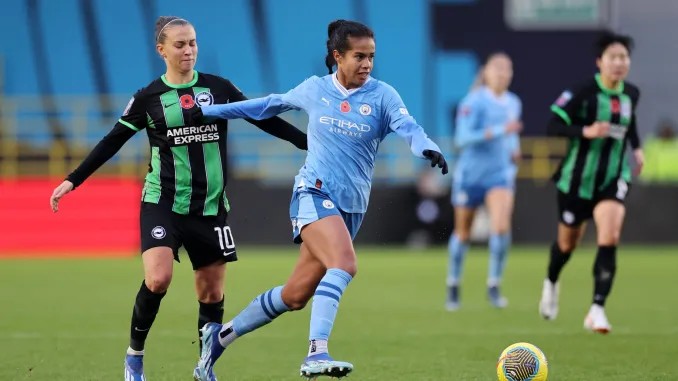
Brighton make the long trip up to Joie Stadium on Friday to face Manchester City, a team that beat the Albion twice last season. Both games were tightly contested and I’m pretty confident the 2-1 loss would have been a draw had the game been 5 minutes longer. In that sense, any points against City is an improvement, however, the odds are against the Seagulls with the Opta supercomputer placing City as 2nd favourites for the title.
City had a difficult start away to Chelsea and despite threatening in spells they lacked a cutting edge with many of their shots heading straight for Hannah Hampton. Their goal came from a Greenwood free kick that had a touch of fortune about it and whilst you could be happy with a 2-1 loss to the WSL champions, their finishing left a lot to be desired.
City’s 9 shots off target and failing to score with 5 shots on target is in stark contrast to Chelsea who were incredibly efficient with 2 goals from 3 shots on target. Of course, many teams struggle to create chances so its impressive that City were able to create as many as they did. City will be looking to correct their shooting accuracy against Brighton and will hope to give Nnadozie a harder time.
My concern is that City limited Chelsea to 8 shots and Brighton enter having failed to score from 18 shots against Villa. Ironically, both sides need to be more efficient in front of goal and on paper.
There is a lot more to come from Man City this season. Bunny Shaw spoke recently about how she has only started three games with Hemp and Miedema (on of them to Brighton) due to unfortunate injuries. Hemp was very dangerous ending the season as the top assister (8) despite only playing 10 WSL games. That is a seriously scary front line and hopefully Brighton play them before they can fully click and gel as a unit.
With no Champions League fixtures for City, they’ll have a lot of training ground time to work on attacking patterns of play. Perhaps, its good we face them so early on in the season.
In defence City are waiting on the fitness of Alex Greenwood and Lily Murphy who suffered injuries at the tail end of the Chelsea game. They may still be waiting for Kerolin too who had a shortened pre season due to Copa America.
Man City have had a solid transfer window with Grace Clinton joining for a fee on deadline day to prevent Manchester United losing her for free next season with Jess Park going the other way. Laura Weinrother joins on a permanent basis and Jade Rose joins her in defence as a versatile defender. Last season they conceded 28 goals in the WSL compared to 15 the season before and City will be hoping they pair can help them bring back that rock solid defence. Of course they have lost Chole Kelly permanently and Jill Roord was a surprise loss to FC Twente.
Last campaign, Man City topped the possession stats holding an average of nearly 62% with Hasegawa dominating the midfield. A staple of their play was moving through the wings before cut backs into the 18 yard box created goal scoring opportunities. Our full backs will have be to defensively aware of these opportunities and we’ll have to progress the ball faster up the pitch to make the most of what little of the ball we may get.
In wider news, there are some new changes at the Joie Stadium with a buggy park introduced and alcohol now allowed in certain areas of the stadium. It’ll be interesting to see what new women’s sport specifics the new Brighton stadium pick up.
I hope all fans travelling up to Manchester have a good time. Unfortunately, work and school aged children mean we can’t make a Friday night game in the North.
BBC Sport claimed a 0-0 draw was a fair result for both teams, I would argue it’s more a mirror of Brightons transfer window. A lot of excellent defensive signings were made compared to the relatively few attacking reinforcements which made a clean sheet and a blank at the top make sense.
When you make so many signings in defence it can take a while for a back line to gel but I thought they were excellent, controlled and in control all game.
Minami had a phenomenal debut and showed very intelligent off the ball movement to prevent dangerous attacking play without having to resort to a last ditch tackle. She had a calmness in possession that we lacked at times last season and passed out from the back with purpose.
McLauchlan, Rule and Olislagers also had fantastic games. Even when Rule was caught in possession, her recovery pace enabled her to catch up and regain the ball before it led to a chance. Olislagers was effective at both recycling possession and adding verticality with quick forward passes through the lines. She played positionally with more restraint than we observed last season, often looking to tuck into midfield rather than overlap and this might be part of the reason our attack lacked variety. The back 4 were also fantastic at baiting the opposition attacks into being offside with the flag going up 5 times against Villa.
Nnadozie had a brilliant game as well. She is an imposing figure close up, although at 5ft 8 most people are imposing to me, and showed incredible power with her goal kicks. She wasn’t helped by the wind but she needs to find her range with a minor criticism being her kicks ended up just reaching Roebuck without nearing a Brighton player. She was a commanding presence at corners and set pieces with punches knocking any stray ball that neared the goal. There was a section that gave me a heart attack as she channelled her inner dribbler to bypass the Villa press but it showed a confidence on the ball that I’m sure we’ll get used to.
The solidity of the team beyond the back five was impressive and it’s clear this is a team that is very much aware of Vidosic’s game plan. With 56.9% possession, there was an element of control that makes BBCs comment about a fair result feel inaccurate. This is a team that can keep the ball and impose control, holding a 63% duel win rate dominating tackles and aerial duels.
However, the attacking stats match the eye test. Despite dominating shots, (18 to 12) and touches in the opposition box (29 to 15) we had the same amount of shots on target (4) which is why it felt the game could have gone either way.
The woodwork saved Brighton from a powerful Daly shot and a beautiful Wilms free kick but equally Villa were highly effective in blocking Brighton efforts.
McLauchlan said post game that she felt Brighton needed more patience when working the ball through the box and she certainly has a point. Ironically, Brighton either needed to pull the trigger earlier when the Villa defence was off balance or be more patient trying to find an opportunity and force the defence into a mistake. In the end, they often rushed attacks without shooting and found themselves in positions where it was hard to recycle the ball out wide and try again. This was compounded by some loose touches and through balls in the final third uncharacteristically many of them by Fran Kirby.
Having said that, Villa did find our attacking play uncomfortable as shown by the sheer number of yellow cards (even when ignoring Grant’s card for an unnecessary tantrum!) and their need to make defensive substitutions in order to combat our play.
I was disappointed but not surprised to see Vidosic hold off until 73 minutes to make a Brighton substitution. Noordam and Rayner certainly added some fresh legs to the press and our attacking play regained some speed with one touch passing. I understand that Vidosic wouldn’t want to throw some new signings fresh to the WSL but 60 minutes seemed like a perfect opportunity to replace Seike with Kafija as her tight control and dribbling might have offered a way to break the deadlock. Equally, Camacho looked sharp, quick and hungry when she entered the fray on 90 minutes and showed she’s quite willing to quickly pull the trigger when she gains a sight on goal.
Agyemang had a good game- certainly her defensive numbers were excellent. There were times, however, where we lacked at focal point because Agyemang was too far back. At one point Haley had the ball on the wing and Agyemang was pretty much in the left back position leaving no one in the centre.I also think we looked better when Cankovic dropped back alongside Symonds to allow Noordam to be further forward. Hopefully, some more flexibility in midfield positions will help create better attacking opportunities in future games.
Overall, I leave disappointed about the result but positive about what the performance and the underlying numbers mean for the season. Whereas, I suspect Villa fans will leave happier with the point but concerned about their prospects for the season. If we can add some more dangerous attacking play to our defensive base I’m quite excited about the next few games!
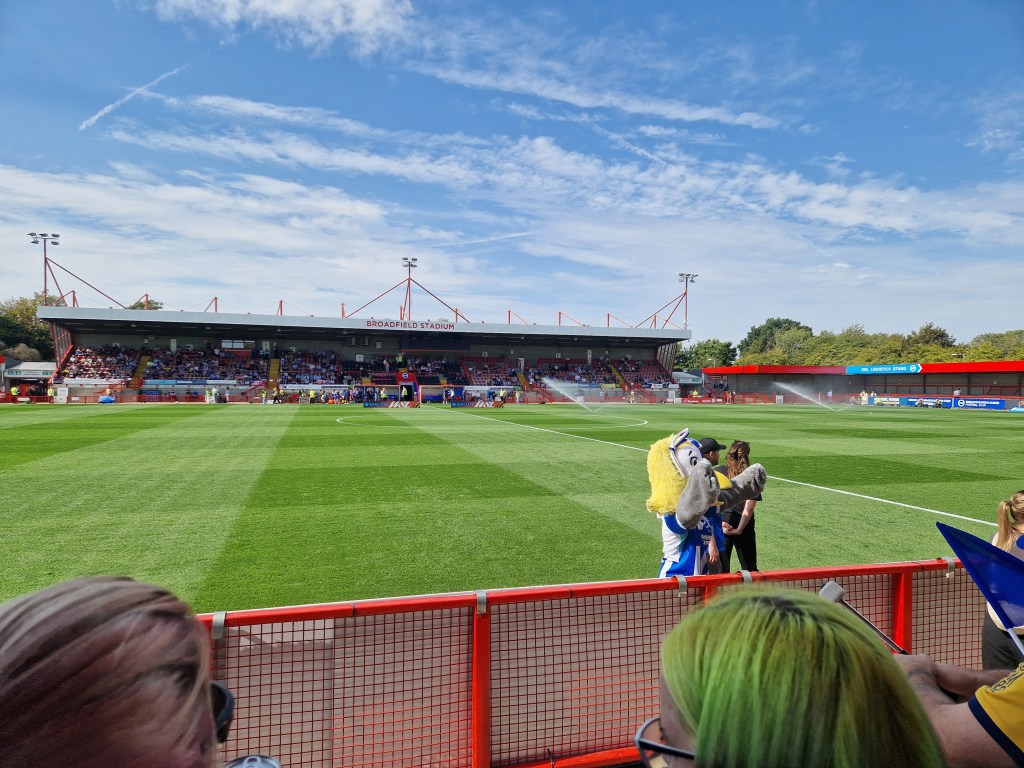
Our first home game of the season is against Aston Villa at the Broadfield Stadium and will be shown live on Sky Sports at 12pm. I imagine it was a contender to be played at the Amex, but the Women’s Rugby World Cup—where England play the day before and New Zealand face Ireland on Sunday—likely ruled that out. Despite it being televised, please do come over to Broadfield and give the team your support.
Brighton vs Aston Villa games were tightly contested last season, with that memorable 4–2 win juxtaposed against the 3–1 loss at the end of the campaign. As one of our “rivals” for the “best of the rest trophy”—if Arsène Wenger considers fourth place a trophy, then I can too—winning this game would set an important marker early in the season. Villa may see this as a must-win, considering they host Chelsea and Liverpool before travelling to London to face Champions League winners Arsenal. That’s a tough start! Hopefully, a Brighton win gives them a difficult September.
Like most WSL sides, Villa have had an active transfer window. Despite losing record WSL appearance holder Jordan Nobbs, they’ve added quality to their squad. Jill Baijings joins permanently from Bayern Munich after impressing on loan last season, and her experienced international teammates Lynn Wilms and Océane Deslandes also bolster the Villains’ ranks. The versatile Dutch defender Wilms, with over 100 appearances for Wolfsburg, adds further Champions League experience. Deslandes offers depth and quality to a defence that underperformed its xG last season.
Young Japanese striker Maya Hijikata may hope to bring her “Hijikata dance” celebration to Birmingham. Described as “one for the future” by their sporting director, she’s expected to gradually take over the number 9 role from Daly. It’s unlikely we’ll see her start on Sunday.
They’ve also added a WSL winner in Ellie Roebuck, who returns after two appearances with Barcelona. I really hope she has a good season with Villa—from September 8th onwards, of course—as it’s been a tough couple of years for her, dealing with multiple injuries and a stroke. I suspect D’Angelo will start, given Roebuck has only played twice since May 2023, but I expect she’ll end the season as their number one.
Villa have managed to retain 2022 Euros winner and last season’s top scorer Rachel Daly, defensive stalwart Anna Patten, and attacker Kirsty Hanson. Former Seagull Katie Robinson has gone on loan to Everton, though she was mostly limited to substitute appearances last season.For those new to the WSL, Villa’s sixth-place finish is deceptive. They had a dreadful start, taking until November to secure their first win—against Crystal Palace with a last-minute goal—and went on a seven-match winless run shortly after. There were genuine fears of relegation among fans, players, and the manager as late as March, before a five-match winning streak earned them 15 of their 28 total points. Their record signing Nunes struggled to score, and they were heavily reliant on Daly’s goals. When Plan A failed, they simply threw on Katie Robinson or Ebony Salmon. It was a far cry from the previous season, when they looked capable of breaking into the top four.
They conceded a lot of goals last season, but the underlying numbers are more positive than they appear. Their defensive xG was 33.92, yet they conceded a whopping 43 goals—a huge disparity. In fact, they faced far fewer shots than Brighton but still conceded three more goals. Most attacks came down their left (41%), but most shots were faced through the middle. Nikita Parris’ FA Cup double last season typifies the kind of goals Villa concede, and I expect Seike will be a strong candidate to score in this game. It all depends on which version of Villa we face—and whether we can replace the goals usually scored by Nikita Parris.Villa have been in good form during pre-season, beating Liverpool 5–1 with five different scorers and winning 1-0 against Union Berlin but also drew 1-1 against Leicester.
In broader news, Aston Villa enter this season having sold their women’s team to a sister company. Reportedly, this was done purely to avoid PSR breaches for the men’s team, rather than to attract new investment—though they are open to selling a 10% minority share. Everton have also sold their women’s team, but with the hope of attracting an American investor and developing their women’s side—an attractive proposition given they have Goodison Park. It’s a shame the women’s teams are being used this way, and the handling at Villa suggests the women’s team isn’t a priority. The optimist might hope it eventually leads to greater investment in the women’s game, but I wonder whether this Villa team will be overtaken in the next couple of years.
Essentially, if last season is anything to go by, Brighton face a Jekyll-and-Hyde team. If we face the Aston Villa of April and May, we’re up against a dangerous side. But if we face the version that leaks goals and struggles to threaten, we may be in for the perfect start.
This is also a game where we may glean how Vidosic sees his team setup. Will Haley start up front after her hat-trick, or will Michelle Agyemang get the nod? Who will be the centre-back pairing—or will we see a back three? Will Kirby start in a deeper role this season? I’m excited to see how Brighton line up and look forward to their progress this season.
This week’s post looks at predictions for the new season that I believe will happen, but most likely, will make me look silly in May.
Top Scorer
This is a wild card and holds an element of the unknown this season. Parris and Fran Kirby shared the most WSL goals (7 a piece) and Parris was the clubs top scorer overall.
Goals were spread throughout the squad last season as injuries, inconsistent selections and inconsistent performances meant the forward line was not always settled. Michelle Agyemang scored 5 goals last season so it would be a big jump to move from 5 to the 10/12 goals that will likely make you Brighton’s top scorer. Her goal to minute ratio is good as she only played 6 games worth of minutes so it’s not impossible.
Madison Haley has looked sharp in preseason securing a hatrick against Levante and might be given substantial minutes in the centre forward position when the new season starts.
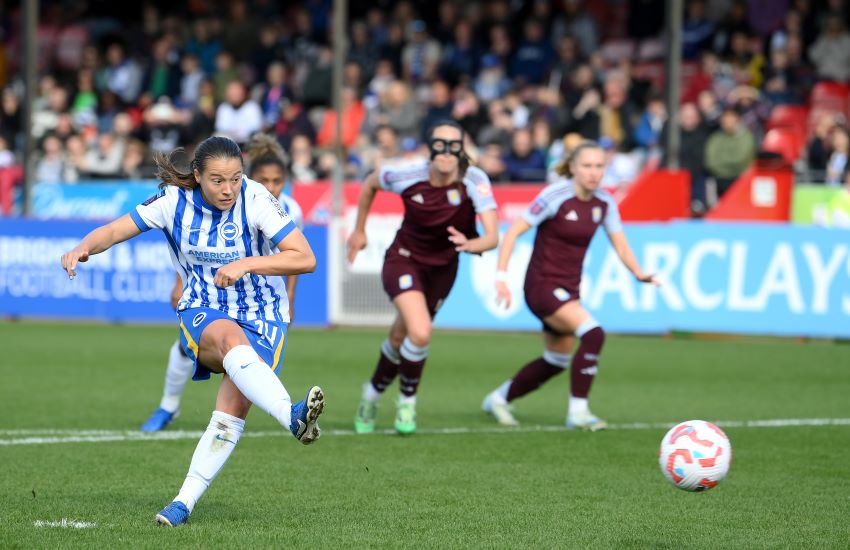
Fran Kirby’s numbers are always boosted by penalties and despite a couple of instances of playing her as a false nine last campaign I can imagine she’ll be outscored.
Personally, I think the top scorer will be whoever Vidosic gives most centre forward minutes to. We have increased the althletism of midfield and pre-season so far showed a deadly increase of off the ball midfield runs. I think they’ll be lots of loose balls, rebounds and messy finishes for a forward to pick up.
Prediction: Michelle Agyemang with 11 goals
Goals scored
Yes, we lost Nikita Parris to London City Lionesses and not replaced her with proven WSL talent but Parris only scored 7 WSL goals last year and the potential for our forwards is quite high. The key word there is potential, if Kafaji, Agyemang, Camacho and Masaka struggle to have an impact and the likes of Cankovic, Haley and Seike have inconsistent seasons then we could obviously have a very dysfunctional attack.
However, my gut/ pre season optimistism tells me these players will be able to make it click and our attack will be diversified enough that we will score slightly more goals than last season.
Prediction : slightly more goals scored
Top Assister
The ability to link the attack together, coordinate the press and assist is where we will hugely miss Parris’ presence as she ended the campaign with 5 assists.
This season, I suspect it will be a three way battle between Rachel McLauchlan, Fran Kirby and Rosa Kafaji. McLauchlan has already laid down her attacking marker in pre season by setting up a considerable amount of goals cutting back/pinging across goal from the right hand side. She was dangerous in these areas last season too picking up 4 assists in the league.
Fran Kirby operates and orchestrates in the final third so along as she doesn’t suffer another long term injury will be one of our most creative players.
As I suggested in a previous blog, Kafaji is an exciting and creative signing who thrives in the final third as a playmaker and dribbler. If she gets substantial minutes over Seike and Haley and is not an understudy to Kirby then she could be one of the most creative players we have seen.
Prediction: Rachel McLauchlan
Goals against
The defence has been overhauled this season. The entire makeup, identity and ability level is different to last year. This years crop are more athletic, more aligned with Vidosic’s playstyle and there is a depth and variety to our defenders. This is before you get to WAFCON winner Nnadozie in goal.
We conceded a lot of unnecessary goals from building up the back last season and, in theory, we have taken steps in personnel to correct this.
Prediction: we will concede fewer than 40 goals
Position
Last season was a historic fifth, the season before was a disappointing 9th. I suspect, this season will be more of a middle ground between the two.
The optimist in me says Brighton have worked smartly in the transfer market, have a squad more suited to a manager who has a clear tactical plan and have been good in pre-season…..the foundations are there to potentially finish 5th and be the best of the rest for two consecutive seasons.
However, other WSL teams have not stood still and the league has become more competive. London City Lionesses may not be the Crystal Palace of last year and give away as many points. Aston Villa, Everton and Liverpool will likely have stronger seasons and we could end up in an unusual scenario where our underlying numbers improve, such as goals scored but our league position. Our goal difference last year was remarkably similar to West Ham yet they finished four places below in 9th, which shows you the distribution of goals matters a lot and how a lot will depend on where the top four drop points.
As you can probably guess, I think Brighton will be anywhere between 5th and 8th with Everton, Aston Villa and Liverpool (although I’m less sure about Liverpool) all being our main rivals for 5th.
Prediction: Finish 6th
Random Prediction
This will be Vidosic’s final season at Brighton as he leaves us in May to take over a “bigger” team either abroad or in the WSL. With increased media attention on the WSL after the women’s Euros and the spotlight being on Brighton having secured Agyemang, Vidosic will leave having significantly enhanced his reputation. I hope this one doesn’t come true but at least it would mean Brighton are in a good place!
Overall, I think we will have a good season by most metrics but fans will be slightly disappointed that we couldn’t achieve 5th two seasons in a row.
Fresh from being part of a Euro-winning England side and being named Young Player of the Tournament, Michelle Agyemang returns to Brighton. Given that she made only three starts last season, where does Dario Vidosic plan to play her, and how does he intend to use her?
One of the first areas worth considering is the loan parameters and discussions that enabled Agyemang’s return to the South Coast. Clearly, gaining more competitive minutes was crucial in Arsenal’s decision to open the door for a loan.
With England’s leading striker Alessia Russo and Champions League final scorer Stina Blackstenius ahead of her in the centre-forward position—and Foord, Caldentey, Kelly, Mead, and new signing Olivia Smith (with Katie McCabe also capable of playing on the left wing)—there is fierce competition at Arsenal. These players are also complete or close to fully developed, which means Agyemang would struggle to break into a side chasing their first WSL trophy since 2019.
However, did Vidosic promise Arsenal more starts for Agyemang this season? Despite making 17 appearances in the WSL, she only started three times and was on the pitch for 566 minutes—essentially the equivalent of six full games. It’s hard to imagine Arsenal agreeing to another loan without a clear pathway for her to gain significantly more starts and minutes.
I also wonder to what extent Vidosic had to commit to a specific position for Agyemang in order to secure the loan. Do Arsenal simply value minutes in the forward line regardless of position, or are they hoping she develops as the centre-forward? Any further signings in the window may reveal Vidosic’s intentions regarding her role. Does he believe Agyemang can go from three starts to being the main striker? She’s not an unknown quantity—Vidosic will know whether she can make the step up. Sometimes, all a player needs is an extended opportunity and a consistent run of games.
Last season, Agyemang had a real learning curve and played most of the forward positions. She replaced Madison Haley in against Manchester City, nominally on the left before swapping with Nikita Parris and playing more centrally. This fluidity helped to unsettle the Man City defence. Against Liverpool, she played one half on the left and one on the right whereas against Everton and Aston Villa she played all the minutes she had on the pitch on the left.
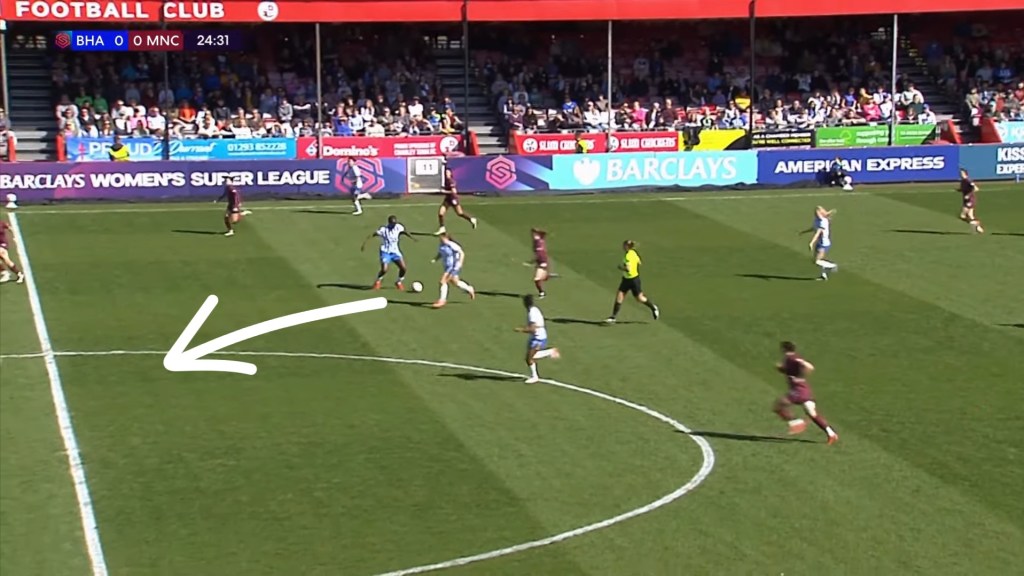
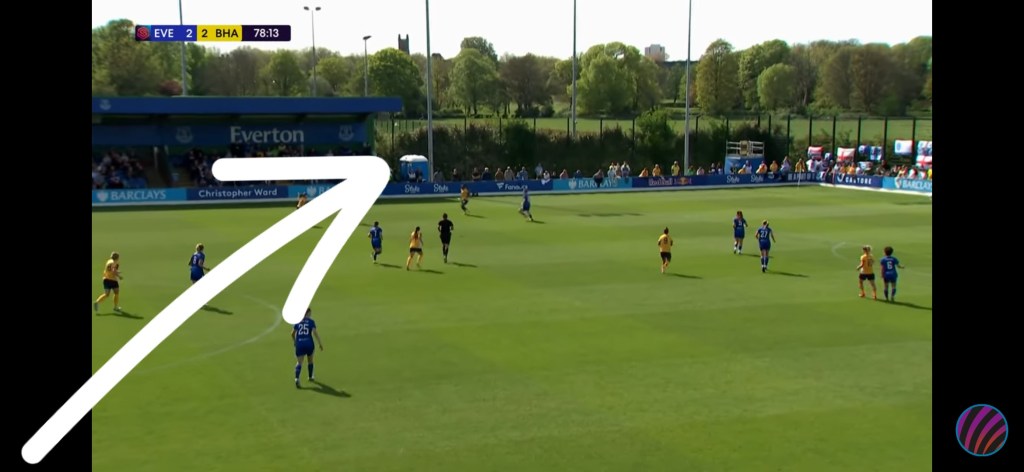
A key tenent of Agyemang’s play is her ability to hold the ball up and keep possesion in advanced positions. When playing in the centre she would often drop deep to link up play such as below where she received the ball in a deep position, before giving a lovely touch and go before sending a ball over the top eventually resulting in a corner.
During pre season, Brighton scored a lot of goals from midfield runners, Noordam’s headed goal from midfield as a classic example, and Agyemang’s hold up play and strength could be a perfect way to amplify our midfield and spread goals around the squad.
Equally, Agyemang is a good outlet to receive long and high balls. When she started on the left in the away fixtures against Everton and Aston Villa she was an outlet to receive long balls and maintain possession by breaking through the first line of the press. Indeed, Brighton produced a long raking cross field ball to Agyemang a total of eight times in the first half alone showing how she is used a valve to release the pressure at the back. This is a trend that happened in any game she played.
When Brighton beat Arsenal 4-2 they used the 6ft defender Caitlin Hayes in a similar way. Hayes would start in the forward position to receive the ball before moving back into defence. Agyemang couldn’t play against her parent club but I can see Brighton using Agyemang in this way as opposed to Hayes having to trek up and down the pitch all the time.
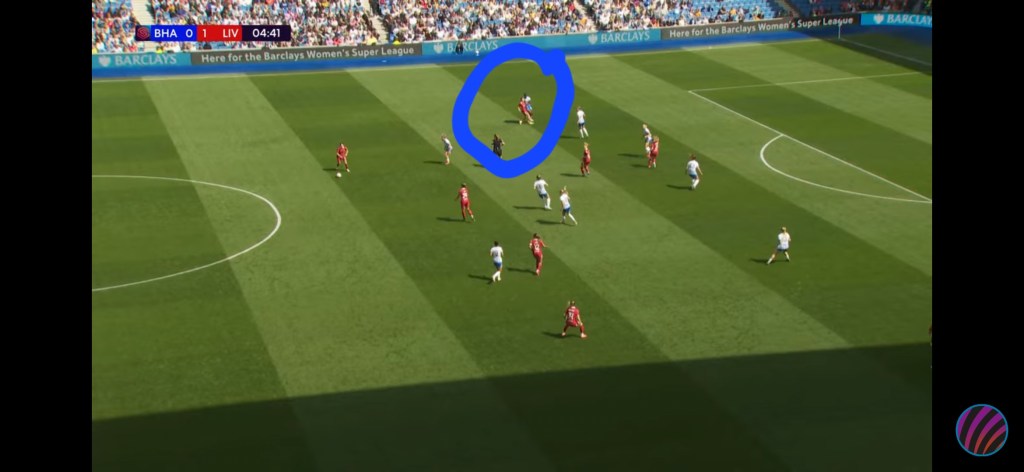
When Agyemang played on the wings, she held the width of the pitch whilst Brighton were in possession and often defended deep off the ball. In the shot below against Liverpool you can see Agyemang is in line with our defence almost acting like another wingback.
Agyemang is not afraid to support the defence and would frequently drop deep to support the midfield or defenders before moving back into forward positions.
One of the downsides of playing across the front line is it is harder to learn attacking positioning. There were several occasssions where Parris and Agyemang would seem to occupy the same spaces in the centre of the pitch seemingly clashing or crowding their own attack.
However, this does not mean they had a dysfunctional relationship as Parris and Agyemang would often swap positions and be fairly fluid in their movements which, when it worked well, would offer an element of unpredictability about their attacking play.
Interestingly, when Agyemang spoke about her equaliser against Italy, she said how she was meant to be at the far post but found herself just outside the main throng of players which hints at a lack of fluency in what her coaches want from their forwards when attacking.
Regardless, Brighton have an intelligent player on loan who has experience across the forward line. If we can hone her experiences into a more central area, we can use her as a way to beat the first press with an aerial ball, a mechanism for midfield runners and a source of goals. She has the experience to play on the wings and after Madison Haley’s hatrick we may find a more fluid front line this season that changes dependent on opposition. It’ll be exciting to see how Vidosic uses Agyemang and how she continues to progress this season.
This week’s column looks at players for whom the 2025–26 season could be a turning point — perhaps even a little “make or break.”
A successful campaign is either needed to reignite their trajectory or could be the moment they take things to the next level. Arsenal correspondent Tim Stillman does a version of this every year, so it’s only fair I credit him for inspiring this Brighton-focused take.
In truth, there were many candidates I could have chosen from the squad, but I’ve limited it to three players who were already at the club before the transfer window.
Aisha Masaka
Aisha Masaka had big shoes to fill when she signed from Swedish side Häcken last July. With Katie Robinson and Elisabeth Terland departing, there was space in the forward line, and hopes were high that the “physical striker,” as Zoe Johnson described her, could make a strong impact and score goals.
Unfortunately, her debut was cut short by a dislocated shoulder sustained while attempting a shot — an injury that ruled her out for five months. Although she made the bench a few times later in the season, she didn’t make another appearance for the Seagulls.This summer’s delayed WAFCON was a chance for her to gain minutes and confidence with Tanzania, but a knee injury in the build-up dashed those hopes.
As Brighton fans, we’ve barely seen Masaka in action, and she remains something of an unknown quantity.The phrase “like a new signing” is often thrown around in men’s football, but it genuinely applies in Masaka’s case. If she stays fit and available, she could become a dynamic presence on the wings, make a huge impact, and announce herself to the WSL.
She turns 22 this season, so she’s still relatively young and has time to build a successful career — injury-free, we hope. Every Brighton fan will be wishing for a season full of minutes and meaningful contributions from her.
Charlie Rule
Like Masaka, Charlie Rule has battled injury — a hip issue and other setbacks led to a 15-month gap between appearances. She marked her return in style, scoring against Manchester City in a very undeserved 2–1 defeat.
This season could be the one where Rule kicks on and truly stamps her mark on the team. She’s a talented player with a strong mindset and a relentless engine that will serve Brighton well.
Her challenge lies in the depth and quality of our defensive options. With Rachel McLauchlan having had an excellent debut season and several internationals joining the squad, competition is fierce. Rule may find herself playing significant minutes in midfield or on the wing, in a role reminiscent of Marisa Olislagers.
In pre-season against Ajax, Rule appeared to play in midfield — or at least found herself in that area — and delivered a brilliant ball that broke the lines and allowed Canković to assist Seike’s goal. Transitioning from full-back to midfield is a well-trodden path, and with her forward-thinking style and adaptability, she may pop up in several positions throughout the season.There are real opportunities for Rule to make a big impact, and I’m excited to see what kind of season she has.
Nadine Noordam
CRAWLEY, ENGLAND – MARCH 02: Nadine Noordam of Brighton looks on during the Barclays Women’s Super League match between Brighton & Hove Albion FC and Chelsea FC at Broadfield Stadium on March 02, 2025 in Crawley, England. (Photo by Mike Hewitt/Getty Images)
This feels like a big season for Nadine Noordam — but in a very different way. Despite only arriving in January, she made a huge impact, thrown into the middle of the season without a pre-season and expected to hit the ground running.
My “hot take” is that Noordam will be our Player of the Season come May, having shown another level and a layer of consistency.
With former captain Vicky Losada now at Bristol City, there’s space not just for a midfield stalwart but for leadership too. While Fran Kirby or Maisie Symonds may be natural choices for captain, leadership is increasingly a shared responsibility at elite clubs. Noordam should be one of our technical leaders — helping to organise the press and manage the tempo of play.She had a great campaign last year, and I’m hopeful she’ll reach even greater heights this season.
Rosa Kafija is a very exciting signing. She missed the Euros through injury, which denied her the opportunity to showcase her talents to the wider English audience and those unfamiliar with the WSL.
But if you’ve been following the Champions League over the last couple of seasons, you’ll be aware of her massive potential and why Arsenal were keen to secure her signature last year. Scoring four goals and providing one assist during Swedish side Häcken’s Champions League run is no mean feat—particularly against teams such as Chelsea, PSG, and Real Madrid, where Kafija’s brace ended Madrid’s campaign early. She finished the campaign as Häcken’s top scorer with 15 goals and helped her club reach the quarter-finals, with UEFA placing her in the top 10 players to watch in 2024. These performances pushed Jonas Eidevall and Arsenal to bring Kafija to North London. When she signed, Eidevall said: “She’s one of the most exciting young talents in the world.” Arsenal fans saw the signing as a major coup, especially with giants of women’s football—Barcelona, Lyon, and Chelsea—all interested in the Swedish international. Many believed she would be the “next big thing” in women’s football, and she still has time to live up to that potential.
However, Kafija found opportunities at Arsenal hard to come by—under both Eidevall and Renée Slegers—making 19 appearances last season and starting only three games. One of her rare starts came against Brighton in the League Cup quarter-finals (the one Arsenal won 4–0), and despite not registering a goal contribution, she was a live wire throughout, had two shots on target and showed a good technical level. With the January addition of Chloe Kelly, competition in the wide areas became even fiercer, and her minutes dwindled further. Eventually, a foot injury requiring surgery kept her out of the Champions League final and the Euros, forcing her to support Sweden from afar. The big positive is that Kafija made a mid-July recovery and should be fighting fit for the WSL start in September.
We are far from getting an Arsenal reject. She’s reportedly on a long-term contract, and according to Arsenal supporters’ groups, the club does not want to sell the 21-year-old and sees her as part of its medium-term future. It feels like Arsenal and Brighton Women have a good working relationship, and the development of Agyemang—particularly evidenced in the Euros—may make Arsenal believe Brighton is an ideal place for Kafija to grow. There are certainly opportunities for her to do so. With Agyemang having returned to North London (for now) and Nikita Parris having joined London City Lionesses, there is space and minutes available on the wings for Kafija to claim—an easier pathway than dislodging Foord, Kelly, Mead, and Caldentey.
So what type of player is Kafija, and where would she fit at Brighton? Essentially, Kafija works best behind the striker and acts as an advanced playmaker, with her ideal position being the number 10. However, she is comfortable on either wing. She is versatile, creative, and attack-minded, thriving in the final third. While she is right-footed, she is very competent with her left and is an excellent dribbler, capable of taking on defenders adding unpredictability and verticality to her play. She has the agility, pace, and technical quality to always be dangerous and can operate in tightly congested spaces, turning quickly with the ball to break a low block. She would suit Vidosic’s possession-based style, as she likes to play subtle passes and quick flicks. Her agility allows her to make sharp, quick movements in tight spaces to evade defenders, making her extremely press-resistant.
During the 2023–24 season at Häcken, she averaged:
4.15 progressive passes
2.38 progressive runs
8.29 dribbles per 90 minutes
These stats show her ability to carry and move the ball forward—something Brighton lacked last season. Her relative two-footedness means she can shoot quickly without always needing to readjust, offering a variety of angles from which she is dangerous.
Equally, Kafija is aware of her defensive responsibilities, which will keep Vidosic happy. In the 2024 Damallsvenskan season, she averaged:
2.47 interceptions per 90
4.71 recoveries per 90
This shows a strong willingness to work defensively. A criticism from her WSL appearances is that she can hold onto the ball too long and sometimes lacks decisiveness with her shots. But considering her age, these are coachable traits—and she would have an ideal mentor in Fran Kirby.
A striker (Agyemang perhaps) in front of Kirby, Sieke, and Kafija would be a very exciting and unpredictable lineup. The opportunity to balance increased verticality with line-breaking passes and comfort in congested spaces could make Brighton very dangerous indeed. I, for one, am very excited to see Kafija rediscover her massive potential in blue and white this season.
This rather large blog will analyse the squad in its current state ahead of the new WSL season kicking off on the 6th/7th of August. While the transfer window remains open for a while longer, Brighton have already been busy. So, where are we strong, and where do we have gaps?
Goalkeepers
Last season, the goalkeeping position was a tightly contested battle between Melina Loeck and Sophie Baggaley. Despite Baggaley starting the season as the club’s number one—and reportedly attracting interest from Sarina Wiegman for an England call-up—she lost her place to Loeck after a string of strong performances. Baggaley only started against Arsenal due to Loeck picking up an injury in the pre-game warm-up. This season, Loeck has signed a new contract and been loaned to Swedish side Hammarby.
However, this hasn’t cleared the path for Baggaley, as Nigerian international Chiamaka Nnadozie has joined the Seagulls. A regular for Paris FC, Nnadozie is a towering presence at 6ft, a WAFCON winner, and was named best goalkeeper of the tournament. With Champions League experience, she’s likely been signed to be the new number one.
As an aside (and not that it matters much), she would be our highest-rated EAFC 25 (FIFA 25 in old terms) player at 85—Fran Kirby is rated 82.
Nnadozie looks to be an excellent addition, raising the ceiling in terms of quality, while Baggaley offers solid depth in a key position. Hopefully, we’ll see greater clarity in the goalkeeper role this season, with Nnadozie becoming the established starter.
This is without mentioning Hannah Poulter, who remains highly regarded and performed well on loan at Portsmouth last season. We’re currently well-stocked with quality goalkeepers, and Loeck’s loan might suggest Poulter will stay and compete with Baggaley for cup minutes. We shall see!
Defence
As I’ve written previously, our defence will look very different this season. We certainly have the numbers and can field two players in each position—assuming we play a back four, which I suspect Vidosic is leaning towards.
Charlie Rule should provide more competition for Rachel McLauchlan, who will hopefully put her hip injury behind her. Vanegas and Olislagers offer two distinct options at left-back, and we have four strong centre-back choices in Carabali, Hayes, Auee, and Minami. These defenders are versatile too—Olislagers epitomised total football last season, playing in midfield, left-back, left centre-back, wing-back, and even as a winger. When Auee returned, she slotted in at right-back, and Hayes’ heat map against Arsenal showed her as both a target-man-style outlet and a dominant defender.
The big weakness in our backline is the lack of left-footed players, especially at centre-back, which affects our ability to beat the press. Brighton struggled down the left side last season, conceding several goals due to a lack of specialist wing-backs and cohesion.
This issue isn’t unique to us—the Lionesses played most of Euro 2022 without a left-footer in defence and struggled most against Spain, who pressed them onto the left side. Arsenal addressed this by moving Steph Catley from left-back to left centre-back to improve press resistance.We need to improve our build-up play on the left, and a left-footed centre-back should be top of our shopping list. For now, we’ll rely on coaching and tactical tweaks to shore up that weakness.
It’s also hard to predict our first-choice defenders. McLauchlan was a consistent performer last season, so Rule will need strong cup performances or an injury to break into the starting XI. Vanegas seems likely to start due to her pedigree, but Olislagers is more accustomed to the WSL and Vidosic’s style, so she may begin the season at left-back, with appearances further forward later on.
With last season’s most-used centre-back pairing gone, predicting the central defence is tricky. Hayes and Auee offer aerial presence and could partner Carabali or Minami depending on the opposition’s attacking style. If Vidosic sticks with a back three, we may be one centre-back short—unless he plans to use a left-back in that role.
Overall, defence is an area with fewer concerns. We have a good mix of depth and quality, and most players have been signed by the manager himself.
Midfield
Like the defence, our midfield evolved throughout last season due to injuries, formation changes, and our search for the best build-up structure. Losada rarely had a consistent partner.
Right now, our likely starting trio is Symonds at the base, with Noordam and Kirby ahead. These three complement each other well—Symonds is an ideal number six with a relentless engine, solid passing range, and a sharp tackle. Noordam was a smart January addition, offering versatility, energy, and line-breaking passes. And Kirby… well, there’s little left to say! Her presence in the middle will elevate the team and support younger players like Carla Camacho and, hopefully, Rosa Kafija.
Cankovic and Rayner provide attacking midfield depth and can replace Symonds or Noordam against low blocks. Cankovic showed her finishing and spatial awareness against Arsenal—we need to see that consistently.We do have the same left-foot issue in midfield, with all players preferring their right. We also lack depth in holding midfield, unless Vidosic sees Olislagers as a viable backup.
Oddly, despite no new midfield signings (except Libby Bance’s return), this area still feels strong in quality, even if light in numbers.
Forwards
This is the area that probably concerns most Seagulls fans. With Nikita Parris moving to London City Lionesses, Michelle Agyemang and Bruna Vilamala returning to Arsenal and Barcelona respectively, and Pauline Bremer heading to Köln, we’ve lost significant attacking firepower.
Parris leaves the biggest hole, contributing seven WSL goals and assists. The others were mostly used as subs, with Vilamala hampered by injury.
Currently, we have Seike, Haley, and Masaka from last season, with Real Madrid’s Carla Camacho as the new addition. This is light in terms of numbers, and depth could be a concern if injuries mount. Camacho is an exciting prospect, having played extensively in youth tournaments for Spain, but it’s a big ask for her to lead the line in her first WSL season.
We need more attacking reinforcements. A short-term experienced forward would help, especially with Haley being the oldest attacker at 26. This would allow Camacho to develop without undue pressure.
If no new striker arrives, Vidosic may see Camacho and Seike sharing the central role, or use Haley’s physicality as a traditional number nine. Haley will want a stronger season after a disappointing output last year.
Swedish journalist Amanda Zaza and Arseblog News both report that Rosa Kafija is close to signing for Brighton on loan—a quality addition if it happens.
Aisha Masaka is almost like a new signing, having had her first season ruined by injuries. She’s acknowledged it wasn’t a good year, and her perseverance is admirable. If she can stay fit, she could be a breakout talent.
Overall
Brighton have had a strong transfer window so far. The old adage “quality over quantity” feels apt, and it’s telling that we’ve competed with clubs like Everton for experienced internationals.
The club’s backing—paying fees and offering longer-term deals—is impressive. Women’s football often sees frequent moves due to short contracts, but reported three- and four-year deals suggest a shift toward building a longer-term squad. Compare our current squad to three years ago—it’s drastically different, while clubs like Chelsea and Arsenal retain their core.
Last season, we had a large squad but inconsistent availability and a mix of players suited to different systems. This season’s squad feels much more aligned with Vidosic’s vision. We’ve also significantly lowered the average age, losing four players over 30 (Losada, Bergsvand, Thorisdottir, and Parris), with Minami being our oldest new signing at 26. Age isn’t a problem, but good squads blend youth and experience.
In essence, we’re just a couple of quality additions away from having a squad that can regularly challenge to be the best of the rest.
It’s been just over a year since Dario Vidosic became Head Coach of Brighton Women—and what an appointment he’s turned out to be. As the fifth manager since Hope Powell stepped down in October 2022, and taking over a club that had spent a season fighting relegation, he faced a tough challenge. Brighton were in dire need of stability, a clearer and more cohesive playing philosophy, and—put simply—better results and performances. Vidosic took us from a relegation battle to a fifth-place finish, with only the WSL titans above us—a historic best for Brighton in the league. I had no idea who Vidosic was when he signed and thought he was a massive gamble. After one season, that gamble appears to be paying off. But it’s worth exploring what he’s done well—and where there’s still room for improvement.
There was a remarkable improvement in our results and league position, and Vidosic deserves enormous credit. Our home form, especially at Broadfield, was outstanding. Against the traditional top four, we only lost to Manchester City at home, while securing draws with Chelsea and Manchester United—and that 4–2 win over Arsenal was hugely impressive. Even the 2–1 loss to City was a game we might have won had it gone on ten minutes longer, and the draw with Chelsea arguably flattered them. These could easily have been victories. We also entertained, scoring three or more goals in four matches, including hammerings of Everton and Aston Villa. This wasn’t an overperformance either—our xG roughly matched our goals scored. Vidosic must be delighted with how secure our home form was; it provided the bedrock for our historic season.
However, our away form under Vidosic was poor. Losses to West Ham, Leicester, and Aston Villa were games we shouldn’t have lost if we were playing at our best. I’m unclear why our form differs so much. At West Ham, our away support wasn’t far off theirs in numbers—and we were certainly louder. I respected that Vidosic came over to the away fans and didn’t shy away. I didn’t make the Villa or Leicester games and followed on YouTube instead, but neither seemed particularly intimidating. In March, Vidosic himself said there were lessons to be learned in how the team prepares for long and tough away trips. Perhaps we need to rethink our setup for away games—or maybe home teams are simply bolder on their own turf. Regardless, I’m sure fixing our away form is high on Vidosic’s list.
Another area for improvement is our defence. We kept four clean sheets—against Tottenham, Crystal Palace, Leicester, and Everton—but conceded in most other games. Our xG against was 42.6, compared to 40 goals conceded, suggesting it’s not a goalkeeping issue. However, we faced 300 shots—far too many if we want to consistently challenge for fifth place. For comparison, Aston Villa had an xG against of 28, conceded 30, and faced 268 shots. Much of this may be down to the squad adjusting to Dario’s playing philosophy, but it’s certainly an area ripe for improvement.
There’s also been a noticeable shift in our playing style as the team adapts to Dario’s vision. Patient build-up and possession-based play have defined our season, but we’re not yet a cohesive orchestra. Injuries disrupted our ability to field a consistent backline, and we frequently switched between a back four and five. Many of the goals we conceded came from individual errors—likely a side effect of playing out from the back. I suspect Vidosic is aware of this, as his transfer activity suggests, and I covered this in my last post. It’s clear there’s a vision for how we want to play, and I hope we stick to it so our squad planning can align accordingly.
Vidosic inherited a squad that lost Robinson, Terland, and Kullberg, but gained internationals like Fran Kirby, Marisa Olislagers, Kiko Seike, and Marit Auée. I doubt he had much influence on those signings—or on Rachel McLauchlan and Bex Rayner, who joined shortly after his appointment—but the squad has undergone significant changes in both personnel and leadership. As with many WSL teams, and given the shorter contracts in women’s football, he’ll need to stay on top of squad development, especially with Nikita Parris potentially on the move to London City Lionesses.
Ultimately, the optics around Vidosic and Brighton have shifted dramatically this season thanks to our fifth-place finish and overall strong campaign. New fans may not realise just how good this season has been. Vidosic has set a high bar for next year, and fans are right to be excited—but we shouldn’t be surprised if we drop a few places. Progress isn’t always linear.
Losing Poppy Pattinson, Maria Thorisdottir, and Guro Bergsvand in a single window marks a seismic shift for our defence. These weren’t fringe players—they were central to Brighton’s defensive identity last season. Replacing their minutes with players who are not just squad depth but ready to start is essential.It’s clear where our recruitment focus needed to be, and major work has already begun to rejuvenate the back line.
It’s worth noting that Bergsvand, Pattinson, and Thorisdottir all played a significant proportion of Brighton’s games last season. All three feature in our top 10 for either appearances or minutes played in the WSL: Bergsvand tops the list with 22 appearances; Pattinson played the third-most minutes in the squad; and Thorisdottir still makes the top 10 for minutes played despite her availability issues. These minutes must be replaced with players ready for the first team.
This also presents an opportunity to reshape our defence to better suit Dario Vidosic’s ideals. How many times did we bemoan the “playing out from the back” philosophy after conceding a cheap goal? West Ham away was particularly infuriating in this regard. Building a defence that is comfortable behind the ball is surely high on the priority list.
Our £100k signing of Moeka Minami is a case in point. She had the highest share of touches in the Roma squad last season and ranked sixth overall in the league. She plays progressive passes and looks very composed on the ball. As a Japanese international and a silverware winner with Roma, she’s a signing that should take us forward—and at 26, she also helps lower the average age of the defence.
The blueprint from the Arsenal victory (still in shock over that 4–2 win!) suggests Caitlin Hayes, who arrived in January, may play a larger role this season and absorb some of the minutes left behind by the departing trio. Hayes’ height was invaluable in defending crosses and also served as an excellent outlet from goal kicks to bypass the high press. While Vidosic may want to see improvements in her passing accuracy and discipline (three yellow cards in six games!), I suspect she’ll be a key figure in 2025–26. It’s potentially a big season for Hayes, and she has a real opportunity to become a regular starter.
Another challenge is replacing Poppy Pattinson, our energetic former left-back. I originally wrote this section yesterday, but had to revise it after Brighton announced the signing of Colombian left-back Manuela Vanegas Catano. At 24, with 30 national team appearances—including a continental final and a 97th-minute winner against Germany—this feels like a signing of real intent. I had wondered whether this would be the season for Marisa Olislagers to nail down a starting spot, but Catano’s arrival suggests Olislagers will serve as both the left-back understudy and a defensive left winger. As sad as I was to see Pattinson go (and what a great signing she is for London City Lionesses), I’m excited to see what Catano can bring to Broadfield.
To fully evolve the back line, we would benefit from signing a left-footed centre-back—as do most clubs. With both Hayes and Minami being right-footed, we risk the same imbalance that has plagued England’s back line at times. A left-footer would make us far more press-resistant and tactically flexible.
I was concerned when we released Bergsvand, Pattinson, and Thorisdottir—replacing them is no small task. But after the recent transfers, I’m feeling more confident. With one more addition, hopefully we can enter the season with a back four that better reflects Vidosic’s vision.










 Seagull Strikers