
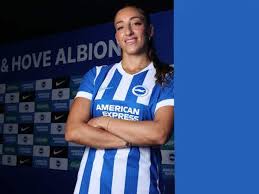
Rosa Kafija is a very exciting signing. She missed the Euros through injury, which denied her the opportunity to showcase her talents to the wider English audience and those unfamiliar with the WSL.
But if you’ve been following the Champions League over the last couple of seasons, you’ll be aware of her massive potential and why Arsenal were keen to secure her signature last year. Scoring four goals and providing one assist during Swedish side Häcken’s Champions League run is no mean feat—particularly against teams such as Chelsea, PSG, and Real Madrid, where Kafija’s brace ended Madrid’s campaign early. She finished the campaign as Häcken’s top scorer with 15 goals and helped her club reach the quarter-finals, with UEFA placing her in the top 10 players to watch in 2024. These performances pushed Jonas Eidevall and Arsenal to bring Kafija to North London. When she signed, Eidevall said: “She’s one of the most exciting young talents in the world.” Arsenal fans saw the signing as a major coup, especially with giants of women’s football—Barcelona, Lyon, and Chelsea—all interested in the Swedish international. Many believed she would be the “next big thing” in women’s football, and she still has time to live up to that potential.
However, Kafija found opportunities at Arsenal hard to come by—under both Eidevall and Renée Slegers—making 19 appearances last season and starting only three games. One of her rare starts came against Brighton in the League Cup quarter-finals (the one Arsenal won 4–0), and despite not registering a goal contribution, she was a live wire throughout, had two shots on target and showed a good technical level. With the January addition of Chloe Kelly, competition in the wide areas became even fiercer, and her minutes dwindled further. Eventually, a foot injury requiring surgery kept her out of the Champions League final and the Euros, forcing her to support Sweden from afar. The big positive is that Kafija made a mid-July recovery and should be fighting fit for the WSL start in September.
We are far from getting an Arsenal reject. She’s reportedly on a long-term contract, and according to Arsenal supporters’ groups, the club does not want to sell the 21-year-old and sees her as part of its medium-term future. It feels like Arsenal and Brighton Women have a good working relationship, and the development of Agyemang—particularly evidenced in the Euros—may make Arsenal believe Brighton is an ideal place for Kafija to grow. There are certainly opportunities for her to do so. With Agyemang having returned to North London (for now) and Nikita Parris having joined London City Lionesses, there is space and minutes available on the wings for Kafija to claim—an easier pathway than dislodging Foord, Kelly, Mead, and Caldentey.
So what type of player is Kafija, and where would she fit at Brighton? Essentially, Kafija works best behind the striker and acts as an advanced playmaker, with her ideal position being the number 10. However, she is comfortable on either wing. She is versatile, creative, and attack-minded, thriving in the final third. While she is right-footed, she is very competent with her left and is an excellent dribbler, capable of taking on defenders adding unpredictability and verticality to her play. She has the agility, pace, and technical quality to always be dangerous and can operate in tightly congested spaces, turning quickly with the ball to break a low block. She would suit Vidosic’s possession-based style, as she likes to play subtle passes and quick flicks. Her agility allows her to make sharp, quick movements in tight spaces to evade defenders, making her extremely press-resistant.
During the 2023–24 season at Häcken, she averaged:
4.15 progressive passes
2.38 progressive runs
8.29 dribbles per 90 minutes
These stats show her ability to carry and move the ball forward—something Brighton lacked last season. Her relative two-footedness means she can shoot quickly without always needing to readjust, offering a variety of angles from which she is dangerous.
Equally, Kafija is aware of her defensive responsibilities, which will keep Vidosic happy. In the 2024 Damallsvenskan season, she averaged:
2.47 interceptions per 90
4.71 recoveries per 90
This shows a strong willingness to work defensively. A criticism from her WSL appearances is that she can hold onto the ball too long and sometimes lacks decisiveness with her shots. But considering her age, these are coachable traits—and she would have an ideal mentor in Fran Kirby.
A striker (Agyemang perhaps) in front of Kirby, Sieke, and Kafija would be a very exciting and unpredictable lineup. The opportunity to balance increased verticality with line-breaking passes and comfort in congested spaces could make Brighton very dangerous indeed. I, for one, am very excited to see Kafija rediscover her massive potential in blue and white this season.
If you want to know more have a listen to Tim Stillman speaking with Swedish Journalist Amanda Zaza here https://podcasts.apple.com/gb/podcast/arsenal-women-arsecast-86-rosa-kafaji-signs/id281128135?i=1000665130635 or read Stillman’s profile piece on her here https://arseblog.news/2024/08/rosa-kafaji-in-profile/
 Seagull Strikers
Leave a comment